
between discipline and mercy
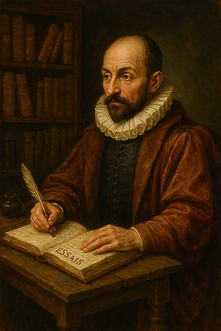

The Preface
This dialogue brings Michel de Montaigne and Seneca into conversation to illuminate a tension every leader knows well: the pull between disciplined principle and the realities of human nature.
Seneca argues for structure, training, and the steady strengthening of one’s inner frame; Montaigne reminds us that self‑knowledge, humility, and an honest acceptance of limits are equally essential.
Together, they sketch a model of leadership that is both firm and humane—anchored in principle, yet responsive to the people who must live and work within those principles.
The Dialogue
Seneca: You appear calm, Michel. Many men cannot bear their own company. They flee into noise and distraction because stillness forces them to reckon with themselves.
Montaigne: Calm, perhaps—but not certain. I have simply learned to live with my inconsistencies. When I examine myself honestly, I find contradiction everywhere, and I’ve made peace with that.
Seneca: Philosophy exists to correct those contradictions. Without discipline, we are ruled by fear, habit, and appetite. Training the mind is no different from training the body.
Montaigne: Stronger, yes—but not invincible. I mistrust any system that promises mastery. Knowing my limits has steadied me more than imagining I have none.
Seneca: Limits acknowledged too readily become excuses. If we accept weakness without resistance, we invite it to govern us.
Montaigne: And if we deny weakness entirely, we become cruel—first toward ourselves, then toward others. A virtue that ignores the human frame breaks the people who try to live by it.
Seneca: We must still hold fast to principles. Without them, life collapses into drift.
Montaigne: Certainly—but let us hold them as tools, not idols. Philosophy should help us live, not demand that we live up to abstractions.
Seneca: Then perhaps we are engaged in the same work from different sides.
Montaigne: Yes. You strengthen the frame; I remind us it is human.
The Commentary
This exchange captures a tension we all live with.
Seneca represents the voice urging discipline, preparation, and self-command—the belief that without effort and principle, we drift.
Montaigne represents the counter voice: humility, self-knowledge, and an honest acceptance of human limits.
The lesson isn’t to choose one over the other.
A workable life needs both structure and mercy. Too much control becomes brittle; too much acceptance becomes complacency.
Wisdom lives in the space between—where we try to do better, without pretending we will ever be finished.
In a distracted age like ours, brevity matters.
But clarity matters more.
If you leave with this much—that living well requires both resolve and self-forgiveness—then the dialogue has made the impression that I hoped it would.